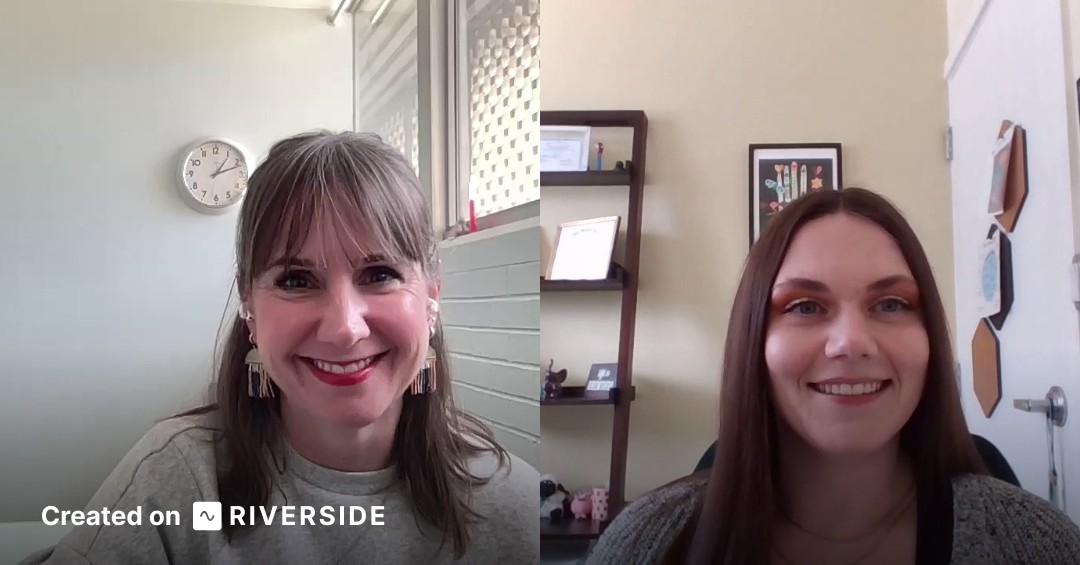
A Conversation with Anna Saviano and Morgan Brueseke
For many, the image of therapy is still a velvet couch in a quiet office. But as our world becomes increasingly digital, the “office” is changing. At Heartland, we’re seeing a shift toward telehealth—not just as a backup plan, but as a preferred choice for many clients.
Recently, Anna Saviano sat down with Heartland therapist Morgan Brueseke to discuss why virtual therapy is more than just a convenience—it’s a powerful tool for mental health.
A New Generation of Therapy
Morgan’s path to becoming a therapist was unique: she completed her Master’s program during the height of the COVID-19 pandemic. While many clinicians had to pivot and learn technology on the fly, Morgan was “born” into the digital space.
“A lot of my education about counseling was done virtually,” Morgan says. “I’m really comfortable doing it this way, and I think that helps my clients feel comfortable, too.”
Morgan specializes in working with young adults (18+) and women-identifying clients, focusing on anxiety, self-esteem, and confidence building. Because she was trained online, she brings a seamless, “organic” feel to the virtual room.
The Pros: Why Choose Telehealth?
If you’re on the fence about skipping the drive to the office, consider these major benefits:
- Extreme Flexibility: Life is busy. Telehealth allows you to fit a session between errands, during a lunch break, or even during a child’s nap time.
- Removing Barriers: For parents, it eliminates the need (and cost) of childcare. For those with unreliable transportation or physical disabilities, it opens doors that were previously closed.
- Comfort in Your Own Space: “Maybe you feel more comfortable in your house talking about painful things,” Morgan notes. Starting therapy from your own sofa can lower the “public stigma” and anxiety of sitting in a physical waiting room.
- Expanded Access: Because Morgan is licensed in Missouri, she can see anyone in the state—from the heart of Kansas City to the most rural communities where specialized therapists might be hours away.
Common Myths & Realities
“Is it just talk therapy?” Actually, no! Morgan uses EMDR (Eye Movement Desensitization and Reprocessing) virtually. By using screen-sharing for bilateral stimulation or guided tapping, she provides high-level trauma care right through the screen. She also uses screen-sharing to watch educational videos or review PDFs and worksheets in real-time.
“Is it private?” This is a big one. Morgan is clear: Sessions are never recorded. > “We don’t use FaceTime or standard Zoom,” she explains. “We use Simple Practice, a HIPAA-compliant platform designed specifically for healthcare. Your privacy and documentation are just as secure as they would be in person.”
What You Need for a Successful Session
To get the most out of your virtual therapy, Morgan and Anna suggest a few “ground rules”:
- A Private Space: You need to be somewhere you can speak freely without being overheard.
- No Driving: While many clients join from a parked car for privacy, you cannot be behind the wheel during a session.
- Stable Internet: A reliable connection is key to maintaining the flow of the conversation.
Is It the Right Fit for Everyone?
Telehealth is an incredible tool, but it isn’t a one-size-fits-all solution. Morgan points out that for individuals experiencing intense mental health concerns—such as active suicidal ideation or self-harm—in-person care is often safer and more appropriate.
Additionally, building rapport can sometimes take a little longer through a screen. However, for those with social anxiety, starting virtually can actually be a “softer” entry point into the therapeutic world.
Final Thoughts
At the end of the day, the medium matters less than the connection. Whether you’re meeting in an office or on a laptop, Morgan’s approach remains the same: open, non-judgmental, and person-centered.
“I’m a goofy person,” Morgan laughs. “I want to have fun sometimes in our sessions. We’re both humans, and sometimes a little humor helps us connect even deeper.”
Interested in working with Morgan or learning more about our telehealth options? Click here to meet our team or contact us to schedule your first virtual session. You can also watch the full video on our YouTube channel.